Customizable Mood Tracker KDP Interior for Self-Awareness Journals
Creating a journal that people return to daily requires more than an attractive cover. It demands interior pages that feel intuitive, offer genuine value, and adapt to different publishing goals. The Customizable Mood Tracker KDP Interior addresses this need directly. Built with Kindle Direct Publishing creators in mind, this editable template provides a structured yet flexible way to add mood tracking to any low-content or medium-content journal. Rather than starting from a blank screen, publishers, coaches, and wellness creators gain immediate access to a system that covers daily, weekly, monthly, and yearly reflection.
What makes this resource worth examining closely is how it balances two competing demands: the desire for a professional-looking interior and the need for complete creative control. The files arrive with multiple size options, editable Canva access, and a thoughtful selection of tracking pages that extend well beyond basic mood logging. For anyone designing journals aimed at mental health, personal growth, or habit formation, this template eliminates hours of layout work while preserving the ability to make the final product unmistakably their own.
What the Customizable Mood Tracker KDP Interior Actually Includes
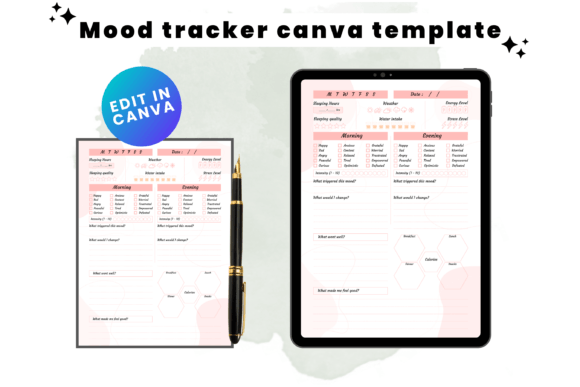
At its foundation, this product is a set of print-ready and editable files built around emotional and physical wellness tracking. The interior contains several distinct page types, each serving a specific reflective function. The Belongs To page provides a simple ownership declaration, common in guided journals. A Mood Guide page helps users identify and name their emotional states, which is particularly useful for beginners developing emotional literacy.
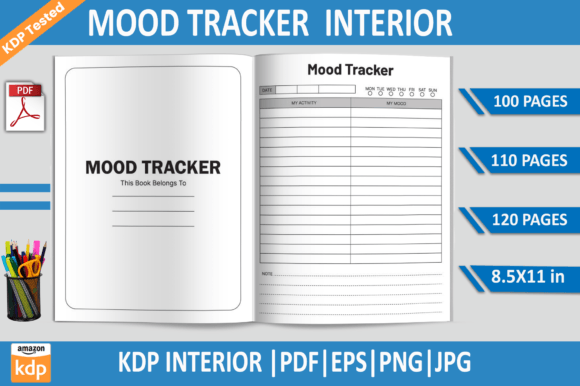
The core tracking pages form the backbone of the experience. The Daily Mood Tracker offers space for day-to-day emotional logging, while the Weekly Mood Tracker encourages pattern recognition across seven-day periods. A Monthly Mood Tracker provides a broader lens, and the Yearly Mood Tracker turns the journal into a long-term self-study tool. Beyond pure emotion tracking, the interior includes supplementary pages that acknowledge how physical factors influence mood: sleep, water intake, food intake, energy levels, and weather all receive dedicated tracking space. A Notes section rounds out the package, giving users room for unstructured reflection.
File delivery is intentionally practical. Publishers receive an editable Canva template link, a ready-to-use PDF file, and PNG files for maximum compatibility. The three trim sizes—6×9 inches, 8.5×11 inches, and A4—cover the most common KDP paperback dimensions. The files are high-resolution with no bleed requirements, which simplifies the upload process significantly. The entire interior spans 7 sheets, though publishers can duplicate or rearrange pages as needed within Canva.
Practical Strengths for KDP Publishers and Content Creators
The immediate advantage of the Customizable Mood Tracker KDP Interior is time savings. Designing a coherent, visually consistent tracking system from scratch typically involves research into effective layouts, multiple design iterations, and careful alignment with KDP specifications. This template handles the structural decisions, letting publishers focus on branding, niche positioning, and marketing. For someone managing a catalog of multiple journal types, that efficiency compounds quickly.
Customization depth deserves particular attention. Because the template operates within Canva, users can modify every element—text, colors, fonts, and layout—without purchasing additional software. This means a publisher targeting new mothers can soften the color palette and adjust font choices, while another targeting corporate wellness programs can tighten the aesthetic considerably. The same underlying structure adapts to vastly different audiences. This flexibility matters because mood journals exist in many sub-niches: anxiety management, hormonal cycle tracking, creative flow states, workplace stress, chronic illness management, and more.
Another practical strength is the multi-format delivery. The PDF version works directly as a ready-to-upload KDP interior. The PNG files allow for page-by-page insertion into other design tools or even combination with other templates. The Canva link provides the deepest editing experience without requiring Adobe Illustrator or InDesign skills. This layered approach means the product serves both absolute beginners and experienced designers who want a starting framework to build upon.
Real-World Performance and Usability Considerations
In actual use, the interior performs best when publishers treat it as a foundation rather than a finished product. The raw template is clean and functional, but its default state lacks the personality that distinguishes top-selling journals. Smart publishers will spend time adjusting visual elements to match their brand, adding cover alignment, and potentially expanding certain sections based on their audience's needs. The Canva integration makes this process straightforward, though users unfamiliar with Canva's interface should expect a short learning period.
Page balance is worth evaluating carefully. With 7 sheets covering multiple tracking categories, the interior spreads attention across emotional, physical, and environmental factors. This holistic approach is a genuine strength—research consistently shows that mood correlates with sleep quality, hydration, nutrition, and activity levels. A journal that captures these relationships encourages more accurate self-assessment than one focused solely on mood. However, publishers should consider whether their specific audience needs all included tracking types or would benefit from a more focused selection. The editable nature of the template means pages can be removed as easily as they can be duplicated.
Print quality depends partly on the user's preparation. The files are delivered as high-resolution with no bleed, which is appropriate for standard KDP interiors. Publishers should verify that any color or grayscale modifications remain legible when printed, particularly in the mood guide and tracker grids. Dark backgrounds or low-contrast color choices can create readability issues in black-and-white print versions. Testing a proof copy before publishing remains essential regardless of template quality.
Design Quality and Visual Consistency
The interior layout follows a coherent structure across all page types. Grid-based trackers use consistent spacing, heading hierarchies remain stable, and the visual language carries through from daily entries to yearly overviews. This consistency matters for user experience—readers unconsciously register when a journal feels professionally assembled versus haphazardly compiled. The design avoids decorative excess, which serves practical purposes well. Mood tracking requires clarity above all else; excessive ornamentation can distract from the reflective work.
Typography defaults are neutral and readable, but the ability to change fonts within Canva is where personality enters. A serif typeface might communicate traditional therapeutic values, while a clean geometric sans-serif could position the journal as modern and science-backed. These decisions influence buyer perception before they ever complete a single entry. The template does not lock publishers into a single aesthetic direction, which substantially increases its long-term utility across different projects and niches.
Who Benefits Most from This Interior Template
Several creator profiles will extract particular value from the Customizable Mood Tracker KDP Interior. New KDP publishers building their first journal products benefit from the structural guidance and KDP-ready formatting. Rather than navigating trim sizes, bleed settings, and margin requirements alone, they work from a verified starting point. Established publishers expanding into wellness or self-care niches save design time while maintaining brand consistency through customization.
Coaches and therapists creating supplementary materials for clients will appreciate the holistic tracking elements. A nutrition coach, for example, might emphasize the food and water intake pages, while a sleep specialist could highlight the sleep tracker alongside the daily mood log. The template's modular structure supports these variations. Wellness bloggers and content creators developing opt-in freebies, digital products, or print-on-demand merchandise can adapt the interior for lead magnets, workshop materials, or standalone product lines.
Personal growth enthusiasts designing journals for their own use will find the Canva editing approachable enough for individual projects. Someone tracking their own patterns over several months could print pages as needed, experiment with layouts, and gradually refine what works best—all without committing to a full commercial product design process.
Limitations and Honest Considerations
The template provides 7 sheets, which some publishers may find sufficient for a complete journal while others will need to duplicate or expand upon. A journal intended for 90 days of daily tracking, for example, requires significant page multiplication. The Canva template approach handles this through duplication, but publishers should factor in the time needed to create a complete interior file with the appropriate page count. The base template is a system framework, not a 100-page ready-to-upload journal.
File format considerations matter for workflow compatibility. While Canva covers most design needs, publishers who rely entirely on Adobe products or Affinity suite may prefer working with the PDF and PNG files rather than the Canva link. The PDF maintains editability in some professional design software, though text elements may not retain full flexibility outside Canva. Publishers with established non-Canva workflows should evaluate whether the provided formats integrate smoothly with their existing processes.
The template's universal design approach serves broad audiences well but may feel generic in highly specialized niches. A mood tracker for individuals with alexithymia, for instance, might benefit from more structured emotion identification tools. A journal targeting users with specific neurodivergent needs may require layout adjustments for sensory accessibility. These are customizations the publisher can implement, but they require conscious effort beyond the template defaults.
Integrating Physical and Emotional Tracking for Better User Outcomes
One underappreciated aspect of this interior is how it connects bodily states to emotional experience. The inclusion of sleep, water intake, food intake, energy level, and weather tracking moves the journal beyond simple emotion logging into a more comprehensive self-study practice. Users who consistently track these variables often discover correlations they previously missed—how a later bedtime affects morning mood, how hydration levels influence afternoon energy dips, how certain weather patterns coincide with emotional shifts.
For publishers, this interconnected design creates a stronger value proposition. A journal that only asks "How do you feel?" offers less insight than one prompting users to consider "What might be influencing how you feel?" The multi-dimensional tracking approach also increases daily engagement, as users have multiple data points to record rather than a single mood score. This can improve journal completion rates and customer satisfaction, both of which influence KDP reviews and repeat purchases.
Making the Most of the Editable Canva Interior
Canva's editing environment removes significant technical barriers for journal creation. Users can select any text element and retype it, adjust colors through the brand kit or manual color picker, swap fonts from Canva's extensive library or upload custom typefaces, and rearrange page order through simple drag-and-drop. The learning curve is gentle enough that even first-time Canva users can produce a customized interior within an afternoon.
One practical approach involves creating multiple variations for different audience segments. A publisher could develop a pastel-themed version for a self-care audience, a minimalist monochrome version for a professional wellness niche, and a playful colorful version for a younger demographic. Each variation shares the same underlying structure but speaks to a distinct market. This multiplies the return on the initial template investment without requiring additional template purchases.
Export settings deserve attention during the production phase. Canva allows export as PDF Print, which works directly for KDP uploads when the page dimensions match the chosen trim size. Publishers should verify that exported files maintain the correct dimensions, particularly when working across the three included size options. Testing by uploading a sample to KDP's previewer before publishing the full journal catches alignment issues early.
Long-Term Value and Reusability
The editable nature of this interior means its value extends across multiple projects. A publisher who creates a generalized mood journal this month can adapt the same template for a seasonal affective disorder tracker in winter, a summer wellness journal, or a peri-menopause mood log. The underlying structure transfers while the visual presentation and page selection evolve. Compare this to purchasing a fixed interior file for each new journal project, and the cost efficiency becomes clear.
For those building a brand around wellness content, the template provides a consistent tracking framework that can appear across different product types. A 6×9 paperback journal, an 8.5×11 printable workbook, and an A4 digital download can all use the same core pages with appropriate adjustments. This creates brand cohesion while meeting customers across whatever formats they prefer. Maintaining visual and structural consistency across a product line strengthens brand recognition and buyer confidence.
The template also functions as a learning tool. Publishers who study its layout decisions—grid spacing, section hierarchy, information density per page—absorb design principles they can apply to entirely original projects later. The mood guide, for example, demonstrates how to present emotional vocabulary accessibly. The sleep and water trackers show effective approaches to daily logging without overwhelming the user. These lessons transfer to any journal creation effort.
Final Practical Observations
The Customizable Mood Tracker KDP Interior succeeds because it understands its role. It does not attempt to be a complete, uneditable product. Instead, it provides a thoughtfully constructed starting point that anticipates real publisher needs—multiple sizes, editability, print-ready output, and comprehensive tracking categories. The template respects the publisher's creative authority while handling the technical groundwork that often frustrates new journal makers.
For the right user—someone willing to invest a few hours in Canva customization, who understands their target audience, and who values a holistic approach to mood tracking—this interior template offers genuine practical utility. It reduces time-to-publish, minimizes formatting errors, and provides a flexible system rather than a rigid single-use file. Publishers who approach it as a customizable foundation will extract the most value, particularly as they adapt it across multiple journal projects and audience segments over time.