Diet Tracker KDP Interior: Ready-to-Publish Journal Design
Publishing a diet journal or food log on Amazon KDP used to mean spending weeks on layout, bleed settings, and margin adjustments. Even seasoned self-publishers can stumble over technical specifications. The Diet Tracker KDP Interior changes that equation. It’s a set of digital files created specifically for print-on-demand — a finished book interior that’s already been sized, tested, and formatted so you can skip the blank canvas entirely.
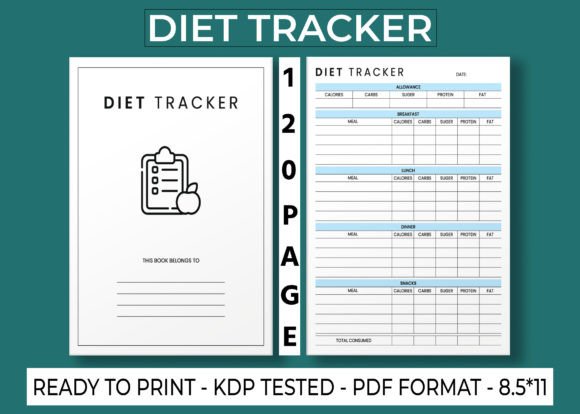
You aren’t just buying a generic template. You get a complete 120-page interior, ready to upload, with a clean structure designed around daily dietary tracking. It isn’t a thin, bare-bones layout either. The package includes an intro page that sets the tone, followed by consistent, repeatable daily spread pages that maintain visual rhythm throughout the book. This matters more than most people realize: inconsistent page design is one of the fastest ways to make a KDP product feel amateurish.
What Exactly Comes with the Diet Tracker KDP Interior?
Understanding the file set helps you see why this works across different workflows. The package provides multiple formats so you aren’t locked into a single piece of software. Here’s what’s included:
- Editable AI File (Adobe Illustrator) — ideal if you want to tweak colors, swap fonts, or add branding before generating your final print PDF
- High-resolution PDF — print-ready with bleed, compliant with KDP’s trim size requirements
- High-resolution PNG files — useful for previews, promotional mockups, or quick page-by-page edits in any image editor
- 120 total pages — substantial enough for a 3–4 month daily tracker; keeps the book value high without feeling bloated
- Intro page — provides a natural starting point where users can set goals or record baseline measurements
- 8.5 x 11 inches — the universal letter size, which remains one of the most popular formats on KDP for journals and planners
- KDP tested — files have been uploaded and approved on Kindle Direct Publishing, so you avoid the guesswork around spine margins and safe zones
One detail many first-time publishers miss: this interior is with bleed. That means elements that touch the edge of the trim line extend past it by a fraction of an inch, preventing ugly white slivers on the final printed book. The files are already built this way, so you won’t need to reconstruct anything.
Who Actually Uses a Ready-Made Diet Journal Interior?
The most obvious audience includes KDP sellers who want to launch a low-content book quickly. But the audience stretches further than that. Diet Tracker KDP Interior serves professionals in multiple lanes:
A nutrition coach might buy the files, add a short custom introduction in the AI file, and list the book as a companion tool for clients. A fitness blogger can publish it under their brand, using the interior as a passive income stream without hiring a designer. Corporate wellness program coordinators often look for tangible tools to distribute during health challenges — customizing the intro page with a company logo turns this into a professional branded asset.
Even educators and health science students sometimes repurpose diet tracking interiors for academic projects. Because the base file is editable, a researcher studying dietary habits could adapt the daily spread layout, print a limited run, and distribute it to study participants. The design is neutral enough to fit clinical or educational contexts while still providing a structured, logical flow.
Why the 8.5 x 11 Format Still Wins on KDP
It’s tempting to experiment with unusual trim sizes, but 8.5 x 11 inches remains a workhorse dimension for journals, workbooks, and trackers. Printing costs are predictable. The format gives ample space for handwriting without crowding. For a diet tracker, that extra real estate means users can log meals, macros, water intake, and exercise notes in one comfortable layout. The Diet Tracker KDP Interior leverages that spaciousness well, ensuring daily entries don’t feel cramped — a common complaint with smaller 6x9 diet journals.
From a publishing perspective, 8.5x11 books also have a strong perceived value. Buyers associate larger formats with comprehensive content, which can support a higher price point compared to pocket-sized alternatives.
Practical Benefits Beyond Saving Time
Time savings are the headline, but the deeper value lies in reduced frustration and increased professionalism. When you upload an interior that’s already KDP tested, you bypass the cycle of submitting, waiting for review, receiving an error, fixing a margin, and resubmitting. Anyone who’s spent a Friday evening troubleshooting bleed settings on page 117 knows exactly how draining that cycle can be.
Consistency across 120 pages of a diet journal isn’t trivial. A manually built interior often drifts — slightly different line spacing on page 27, a misplaced text box on page 53. The Diet Tracker KDP Interior is built as a cohesive file, so each daily spread maintains identical structure. That uniformity signals quality to buyers flipping through the “Look Inside” preview on Amazon.
Also worth noting: having high-resolution PNGs alongside the editable AI file means you aren’t forced to learn Illustrator if you don’t want to. You can make text-based changes in a simple image editor, or even hand the PNGs to a freelancer for quick customization without them needing to reconstruct the layout.
How the Editable File Expands Possibilities
The AI file is more than a convenience — it’s a doorway to differentiation. On Amazon, diet journals can look interchangeable. But minor customizations can set your book apart in search results. You might:
- Add a progress tracker page every 30 days to help users see changes over time
- Swap the intro page for a guide on macronutrient calculations
- Include a QR code linking to a complementary digital resource
- Adjust the color palette to align with a specific niche — keto, plant-based, or intermittent fasting themes
Because the interior already handles the heavy lifting (margins, trim, bleed), you’re free to focus on small value-adds that influence a buyer’s decision. The editable Diet Tracker KDP Interior becomes a foundation, not a restriction.
Realistic Use Cases and Observations
Let’s walk through a few scenarios where these files make sense.
Launching a KDP Diet Journal in Under an Hour
You’ve researched keywords, found a gap in “low-carb food diary” searches, and want to test the market. Download the files, open the AI, add a title page, export the print-ready PDF, and upload. Cover designer handles the exterior. Within an hour, your book is in review. No layout fees, no delayed freelancer communication. If the book gains traction, you circle back and refine the interior further — but you’re not investing heavily upfront.
Creating a Branded Health Program Companion
A wellness coach running an 8-week group program wants participants to log meals, mood, and sleep. She edits the intro page with program instructions, branding, and a welcome message. The 120-page count covers the full duration with room for notes. She then orders author copies through KDP at cost and distributes them as part of the program package. The physical book feels far more substantial than a printed PDF handout.
Building a Niche-Specific Tracker for a Growing Audience
Imagine a blogger focusing on menopause nutrition. She uses the editable interior to adapt prompts — adding hormone-related symptom check-ins alongside the diet log. The result is a targeted product that her existing audience is already primed to buy. The Diet Tracker KDP Interior gives her the structural skeleton; she supplies the niche expertise.
Important Considerations Before You Publish
As useful as a ready-made interior is, there are a few things to keep in mind. First, always preview the final PDF in Amazon’s online previewer. Even KDP-tested files can occasionally show discrepancies depending on the exact print specs chosen for the listing. Confirm that you’ve selected the correct paper type (usually white or cream) and that the bleed settings match the interior’s preparation.
Second, if you modify the AI file extensively, particularly near the trim edges, recheck that critical text or design elements remain within the safe zone. Bleed covers the edge color, but you don’t want important content getting trimmed away in production.
Third, think about interior thickness. 120 pages on 8.5x11 creates a solid, substantial book. If you plan to add more pages, ensure the spine width calculation is updated for your cover design. Conversely, if you trim page count, the cover spine might need adjustment. These are standard KDP publishing details, but overlooking them can ruin the physical product.
What Makes This Interior Stand Out from Free Options?
Free interior templates exist, but they often require significant rework — fixing margins, setting up bleed, ensuring page numbers don’t overlap with content, and adjusting for KDP’s unpredictable print variations. The Diet Tracker KDP Interior removes that friction. The intro page alone adds perceived value, and the 120-page length means you’re not stuck with a flimsy 30-day booklet that struggles to earn positive reviews. Customers who buy diet journals want longevity; a book that runs out in a month feels like poor value.
Additionally, the high-resolution PNG files allow you to repurpose individual pages for promotional content without extracting from the PDF. A single daily spread PNG can become a Facebook ad graphic, an Instagram story preview, or an Etsy listing image — all without quality loss.
Integrating the Interior into a Broader Publishing Strategy
If you’re building a brand across multiple low-content niches, having a reliable interior like this allows you to iterate quickly. You might create a series: a Diet Tracker, a Fitness Tracker, a Hydration Log, a Meal Planner — all using the same base layout adjusted in the AI file. Producing a cohesive product line signals professionalism and encourages bundle purchases. Amazon customers frequently buy multiple journals from the same publisher when they recognize a consistent, well-designed format.
The Diet Tracker KDP Interior serves as a core asset, not a one-off purchase. Think of it as a tool that grows with your publishing activity. Whether you publish one book or ten, the underlying structure stays solid.
Real-World Observations from KDP Publishers
Publishers who have used pre-made interiors often report that the biggest win isn’t speed — it’s confidence. Knowing the file has been tested and approved removes a layer of anxiety around account health and customer returns. Poor formatting leads to negative reviews, which hurt rankings and sales. A clean, properly bleed-set interior dramatically reduces that risk.
Moreover, a diet tracker is a product type where interior quality directly impacts usability. If a user can’t comfortably write in the book or loses content to tight gutters, they refund or leave poor feedback. The 8.5x11 size with proper margins gives generous writing space, and the bleed-ready files ensure nothing critical gets trimmed. These little details accumulate into a positive customer experience that keeps the book selling long-term.
Ultimately, the Diet Tracker KDP Interior is a practical investment for anyone serious about publishing on Amazon — especially those who want to focus on marketing and niche selection rather than sweating over layout design. It packages experience into a download, letting you launch with the same polish as a publisher who’s been at this for years.