Fire Alarm Testing Log Book for Safety and Compliance
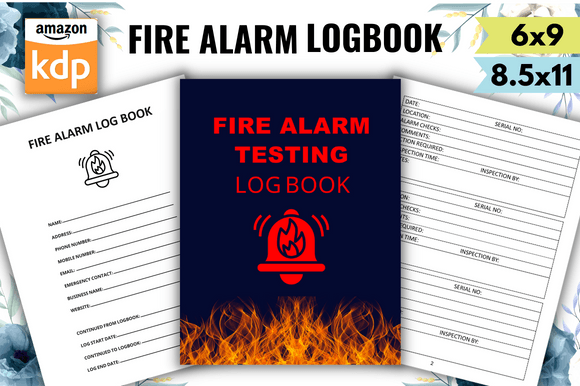
Keeping a building safe goes beyond installing smoke detectors and pulling alarms during drills. It requires consistent documentation, clear records, and a system that anyone can follow. A Fire Alarm Testing Log Book turns a scattered collection of notes and sticky reminders into a reliable, organized tool that property managers, business owners, and safety officers actually trust. This particular version arrives as a downloadable digital product, ready for Amazon KDP upload or home printing, with two interior PDF files sized at 8.5 by 11 inches and 6 by 9 inches. Across 105 pages, the layout includes bleed and a clean 300 PPI resolution, giving users a professional result whether they print a single copy or produce a batch for multiple locations.
Why a Dedicated Log Book Changes the Routine
Most people responsible for fire alarm testing understand the legal requirements. Weekly tests, monthly inspections, annual servicing. What gets overlooked is the record-keeping itself. Jotting results on a clipboard or saving digital notes in different apps creates inconsistency. When an inspector arrives or an insurance audit happens, fragmented records create unnecessary stress. A structured log book solves that by giving every test a predictable home. The date, time, device tested, alarm response, battery condition, and any follow-up actions each get their own space. Nothing gets lost between shifts or forgotten during busy weeks.
The Fire Alarm Testing Log Book becomes especially useful in environments with multiple staff members. A maintenance technician on Monday logs a call point test. On Wednesday, a different person checks the same unit. Without a shared format, the second person might not know what the first observed. A dedicated book keeps the narrative continuous. It also reinforces accountability. When signatures and timestamps appear beside each entry, responsibility becomes visible and traceable.
Who Benefits Most from This Tool
The obvious audience includes facility managers, school administrators, hotel operators, and healthcare coordinators. But the need stretches further. Small retail shop owners often handle their own compliance checks without a dedicated safety team. A clear, printed log book removes guesswork and keeps them aligned with local fire codes. Landlords managing a handful of rental units can document alarm tests across properties without juggling separate systems. Co-working spaces, places of worship, community centers, and even home-based daycare providers all face similar requirements.
Beyond the compliance angle, the log book serves as a training resource. New employees learning safety protocols can review past entries to understand testing frequency, common issues, and resolution steps. A well-maintained log functions almost like a case study archive, showing patterns over months or years. If a particular detector repeatedly fails or a specific wing of a building triggers false alarms, the pattern emerges clearly from consistent documentation.
Creative Approaches to Log Book Use
While the word "creative" might seem odd beside fire safety, there is genuine room for thoughtful adaptation. Some organizations pair the printed log with color-coded tabs for different zones or building floors. A school might separate entries by wing, using the log book's structured pages as a foundation while adding simple visual cues for faster reference. Others attach photo pockets or QR code stickers linking to video walkthroughs of testing procedures, blending physical documentation with digital support.
The availability of two sizes opens practical options. The larger 8.5 by 11 inch format works well for centralized record rooms, maintenance offices, or compliance binders that stay on-site. The compact 6 by 9 inch version fits into inspection kits, glove compartments, or wall-mounted holders near alarm panels. Some users print both, keeping the full-size version for detailed annual records and the smaller one for weekly technician rounds.
Adapting the Layout for Different Environments
An industrial warehouse has different needs than a boutique hotel. The log book's structure provides consistency, but how teams implement it varies. A manufacturing plant might add columns for dust levels or machinery vibration notes that could affect detector performance. A restaurant might track kitchen smoke alarm tests alongside hood suppression system checks, using the log book margins for cross-references. A theater or event venue might log tests before every public gathering, treating the book as a pre-show checklist rather than a weekly routine.
The key is treating the Fire Alarm Testing Log Book as a flexible framework rather than a rigid form. The printed pages guide the process without restricting what additional context belongs. Teams that add a brief "notes" column or attach relevant equipment manuals nearby often find their compliance audits go smoother because inspectors see intentional organization rather than bare-minimum effort.
Digital Product Advantages for Publishers and Users
Purchasing a downloadable log book means immediate access without waiting for shipping. For KDP publishers, the ready-to-upload PDF cuts out formatting headaches. The files arrive with proper bleed settings and high resolution, so printing looks crisp whether produced through Amazon's print-on-demand service or a local print shop. The 105-page count strikes a balance between being substantial enough for long-term use without feeling wasteful. Users who need multiple copies for different departments or properties simply reprint as needed.
Small business owners who maintain several locations appreciate the consistency across sites. Every building follows the same format, making regional audits faster and training more straightforward. The digital file sits in a shared folder, and when a new facility opens, printing a fresh log book takes minutes.
Maintaining Clarity and Consistency Over Time
A log book only works if information stays readable months later. Handwriting that looks clear today might become ambiguous after pages fill up and different people add entries. Encourage everyone using the log to stick to standard abbreviations and avoid shorthand only one person understands. Some teams include a small legend on the inside cover defining common terms like "FA" for fire alarm, "CP" for call point, or "SD" for smoke detector. This small step preserves clarity regardless of who reviews the book later.
Consistency also means logging negative results. A test where everything works perfectly deserves the same thorough entry as one where a battery needs replacement. Over time, the ratio of clean tests to issues becomes a meaningful metric. Insurance providers and fire marshals notice when records show a pattern of attention rather than sporadic note-taking.
Realistic Examples Across Different Settings
Consider a 40-unit apartment building. The property manager assigns a maintenance lead to test hallway smoke detectors and stairwell alarms every Thursday. Each floor gets a dedicated section in the log book. Over three months, entries reveal that the third-floor east wing detector triggers a low-battery warning roughly every five weeks. The pattern prompts a closer look, and the team discovers a wiring issue that would have gone unnoticed without systematic logging.
A small private school holds monthly fire drills and weekly alarm checks. The administrative coordinator keeps the log book in the front office, where teachers sign off after checking the detectors in their classrooms. During an annual inspection, the fire marshal asks to see records. Instead of shuffling through emails and sticky notes, the coordinator opens the log book to a clean, chronological record. The audit concludes in half the expected time.
A freelance safety consultant services multiple small businesses across a city. She carries the compact 6 by 9 inch log books for each client, filling entries during visits and leaving the original on-site while photographing pages for her own records. The consistency across clients makes her reporting more professional, and her clients appreciate having a tangible record after she leaves.
Practical Recommendations for Getting Started
Begin by deciding how many locations or zones need their own log book. Print one master copy and evaluate the layout by completing a few sample entries. Notice what feels intuitive and where your team might need additional guidance. Consider laminating a reference page that explains testing procedures for different alarm types, placing it inside the cover for quick access.
Store the log book somewhere accessible but protected from dust, moisture, and casual tampering. A wall-mounted document holder near the fire alarm panel works well. In settings where multiple departments share responsibility, establish a simple checkout system so the book does not disappear during critical testing windows. Digital backups remain valuable, even for paper-based systems. Scanning or photographing completed pages every quarter creates a safety net if the physical copy gets damaged.
Review past entries periodically, not just during audits. Look for trends, recurring equipment failures, or gaps where testing frequency slipped. The log book reflects your facility's attention to safety, and honest self-review keeps standards high between formal inspections.
Why This Specific Log Book Stands Out
Many generic log books exist, but few combine print-ready formatting with thoughtful design specifications. The dual-size option respects different use cases without forcing a one-size-fits-all approach. The inclusion of bleed in the PDF files means edge-to-edge printing works cleanly, which matters for a document that might live in dusty maintenance rooms or get handled by gloved hands. At 300 PPI, text remains sharp, even when pages get photocopied or scanned for record archives.
For entrepreneurs and creators selling on KDP, the ready-to-upload files eliminate design guesswork. The product delivers exactly what it promises: a practical, well-made log book that serves a clear purpose. For end users, the Fire Alarm Testing Log Book provides structure without complexity, turning a regulatory chore into a straightforward habit that protects people and property.
Safety documentation does not need to feel overwhelming. With the right tool in place, the routine becomes second nature. Every entry represents a small but meaningful act of attention. Over weeks, months, and years, those entries add up to a culture of genuine care that auditors, insurers, and occupants all recognize. That quiet confidence starts with a simple, well-organized book waiting to be filled.